
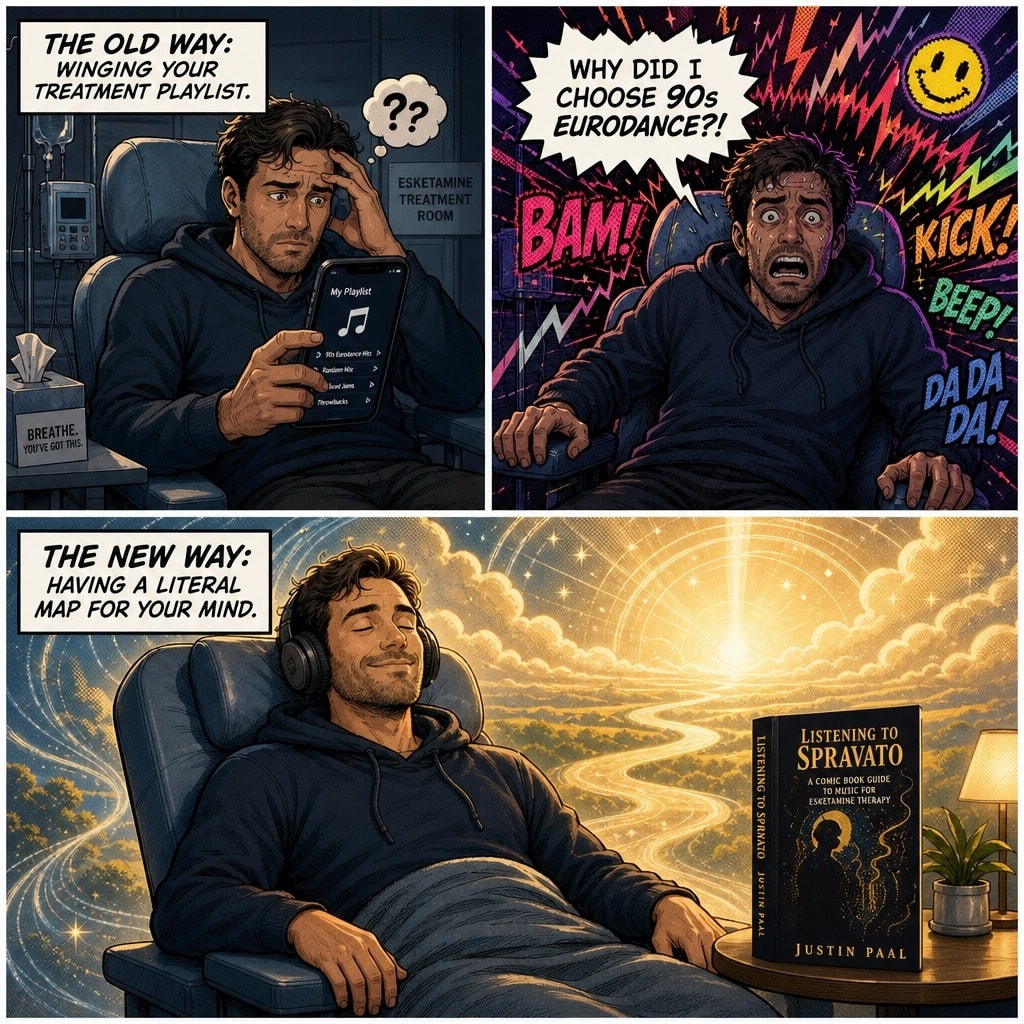
Spravato: Now Just Another Toy for the Chronically Online
A cynical but honest look at how social media culture has turned a serious dissociative antidepressant into content — and what gets lost in the process.
It was inevitable. Give younger people anything — a meal, a mood, a medical treatment — and they'll turn it into content. They can't help themselves. Their instinct to perform is so deeply wired that even a Spravato session becomes just another chance to broadcast their curated "journey."
And now, apparently, the soundtrack matters too.
Scroll through TikTok and you'll find twenty-somethings in clinic recliners blasting rave music like they're about to roll into EDC, or metal so loud it rattles the fluorescent lights. They're sitting there with a Schedule III controlled medication coursing through them, pupils blown wide, head bobbing like they're pre-gaming for a warehouse party. Some of them even caption it like it's a vibe: "Spravato + techno = healing." Sure. Nothing says "mental health treatment" like dissociating to a 160 BPM kick drum.
Others go the metal route — because apparently nothing complements a dissociative antidepressant like double-kick drums and someone screaming about the void. They film themselves zoning out, slap a filter on it, and call it "therapy." It's not therapy. It's content. It's performance. It's noise — literal and figurative.
"Spravato was designed for people who are drowning. People who've tried everything, endured everything, and still wake up with a lead weight on their chest. It's not a prop. It's not a playlist. It's not a mood board. But try telling that to a generation that thinks healing is just another aesthetic.
They're not present. They're not reflective. They're not even remotely aware of the gravity of what they're doing. They're too busy turning a medical treatment into a rave, a metal show, a meme — anything but what it actually is: a lifeline.
And the bleak truth? They're wasting it. Wasting the moment. Wasting the opportunity. Wasting the chance to actually feel something real instead of performing it for strangers.
But why would they stop? Silence doesn't trend. Stillness doesn't monetize. And genuine healing doesn't rack up views.
Spravato was meant to help people climb out of despair. Instead, it's become another stage for people who can't go ten minutes without turning their lives — and their music — into a broadcast.
Honestly, it's exhausting to watch.

Justin Page
Author, Listening to Spravato
Now available
The Listening to Spravato® Book
Genre guides, session playlists, and the science of music-assisted healing — by Justin Page